I've never fit CHANEL N°5 in me. I always be a lit bit spice and flower girl. But I should admit after these adds, even I started to think about to get one of them:)
Celebs etiketine sahip kayıtlar gösteriliyor. Tüm kayıtları göster
Celebs etiketine sahip kayıtlar gösteriliyor. Tüm kayıtları göster
25 Ocak 2013 Cuma

9 Aralık 2012 Pazar
Cloud Atlas Review / Bulut atlası Hava Atma Rehberi
Cloud Atlas filminden çıktıktan sonra ii bi film mi boktan mi karar veremedim... Hani çıkıosunuz ya bazı filmlerden tam olarak anlamadığınız duygusuyla. Matrix 2- 3 falan biraz öyle mesela...Sonra millletle tartışarak falan anca toparlıyorsunuz düşüncelerinizi. İşte bu da öyle.
Ben de bir arkadaşımın tavsiyesi üzerine filmle ilgili diger yorumları okumaya karar verdim. Dınınıııım... Bir aceminin yorum denemeleri:) Yorum denemesinden ziyade birileriyle konuşurken hava atmanıza da yarayacak genel bilgiler vereyim. Bari halka böyle bir faydam olsun. Hani mesela kız/erkek arkadaşınızla gittiniz filme, çıkınca işte bu da böyleymiş falan diye buradan öğrendiklerinizi satarsınız. Hem konuşma sıkıntısı çekmemiş olursunuz hem de filmi anlamadığınızı karşınızdaki anlamaz. Hahaaaa....
PS: Arkadaşımın yorumu Cloud Atlas üzerine değildi. Genel olarak kitaplar ve filmlerle ilgili yazılardan çok şey öğrenebileceğimi anlatıodu bir konuşmamızda. Şöyle dedi: 3 Silahşörler salak bir çocuk kitabı gibi algılanıyor ya. Umberto Eco'nun "3Silahşörler" kitabı ile ilgili bir yorumu varmış. Arkadaşım o yorumu okuduktan sonra kendisi için "3 Silahşörler'in en sevdiği kitaplarda top list'e girdiğini söyledi.
Neyse film yorumuma geri döneyim. Filmi bir bütün olarak değerlendirmek gerek. dolayısı ile oyuncular iyi, hoş tabi de yazar ve yönetmen de önemli artık bizim için.
Cloud Atlas 2004 yılında yazılmış bir roman. Yazarı İngiliz David Mitchell. 6 ayrı hikayeden oluşuyor. Kitap bir ton edebiyat ödülü kazanmış. Bu da ii bir film olduğu ihtimalini kuvvetlendiriyor.
Film/Kitap 6 farklı hikayeden oluşuyor. 1849 yılında geçen, bir Amerikalı doktorun bir köle ile arkadaşlığını içeren hikaye; 1936 yılında geçen, bir İngiliz bestecinin yaratıcılığını ve sonrasında da özgürlüğünü aradığı bir hikaye; 1973 yılında geçen, Amerikalı bir gazetecinin San Francisco'da nukleer enerji santralini araştırdığı bir hikaye; 2012 yılında geçen, yaşlı İngiliz bir editörün eğlenceli hikayesi; 2144 yılında Yeni Seul'de geçen, klon-kölelerin özgürlük hikayesi ve uzak gelecekte geçen yarı aşk yarı vahşiler yarı korku dolu bir hikaye. Hikayelerin ortak felesefeleri de var ama bir o kadar da birbirinden farklı hikayeler. Dolayısı ile ben sanki 6 farklı film izlemiş gibi hissettim. Filmin 172 dk olduğunu da düşünürseniz yalan da olmaz hani... Akşam 10'da girdik, gece 1'de çıktık kardeşim salondan. Ara verene kadar altımıza işeyecektik... Hatta sanki 6 farklı yönetmen yönetmiş gibi bile dedim. Ve sonradan okudum ki 6 değil ama 3 farklı yönetmen çekmiş filmi. Yorumculuk benim kanımda var canım:))))
Lana Wachowski ve Larry Wachowski 2 gelecek bölümü ve 1849 yılının hikayesini çemişler. Tom Tykwer1936, 1973ve günümüzün hikayelerini çekmiş.
Şimdi hava atmanıza yarayacak bir bilgi daha: Wachowski kardeşler Matrix serisini de çeken kardeşler. Ve bir zamanlar Wachowski Brothers diye isimlendirilirken artık Wachowskis deniliyor kendilerine çünkü erkek kardeşlerden biri artık kız kardeş olmaya karar vermiş. Hem de kızıl saçlı tatlı bi hatuna dönüşmüş... Yaaa. Ay film yorumundan dedikodu sitelerine hızlı bir geçiş oldu bu. Toparlanayım hemen....
Açıkçası ben yaşlıların hikayesini çok sevdim. Genel olarak karanlık filmin güldüren tek hikayesiydi onlar. Filmler arasında birbirlerine bağımsız linklerle bağlanmalarını sevdim. Ama bu linkler dışında filme giderken "6 bağımsız hikaye" hikayesini duymadığım için sonunda bu kadar adam bir şekilde bağlanacak teorim hayal kırıklığı ile sonuçlandı. Uzak gelecek hikayesinde ortaya çıkan Şizofrenik şekilde ortaya çıkan şeytan çok etkileyiciydi.
Yorum yaparken filmin felsefi mesajlarını nasıl algıladığımı da yazmalı mıyım acaba? Yoksa spoiler'a mı girer bunlar bilemedim. Daha derin yorumlar için birileriyle de konuşmalıyım sanırım.
The End...
İmza: Acemi Yorumcu/Dedikoducu


For English review of movie I love The New Yorker's review so I decided to positioning it here: I'm not cheating, I'm just lazy:) and my first review didn't became as much fascinating as I expected. So u deserves better comments:)
The movie’s six episodes are set in six time periods: in 1849, an American doctor helps a slave escape; in 1936, a young British composer seeks to free himself from the authority of an older one; in 1973, an American journalist seeks to reveal the dangers of a San Francisco nuclear power plant; in 2012, a British editor seeks to escape from a nursing home; in 2144, a clone-slave, or “replicant,” in Neo Seoul flees captivity to expose the truth of that society; and in a distant post-apocalyptic future, that replicant’s message, a sort of gospel for a persecuted sect, inspires the survival of civilized humanity on a distant planet.
If a prime virtue of direction is the use of images and sounds to conjure an experience of something beyond the substance of the script, only one of the six episodes has any substantial merit: the one set in Neo Seoul in 2144, plus a few brief scenes in the post-apocalyptic one, a sole moment set in 1849 (an exhilarating swing by rope from a mast) and another from 1973 (a view from inside a car as it flies off a bridge into the bay). Otherwise, it’s a painful movie to look at, directed mostly at a television level. In terms of visual style, it’s five-sixths a nullity, a non-experience—and, at a hundred and seventy-two minutes, that’s a whole lot of nothing.
Having not paid attention to the coverage, I had no idea how the directorial duties were divided up, and assumed—wrongly, as it turns out—that they weren’t divided at all. Actually, Lana Wachowski and Larry Wachowski directed the two futuristic episodes and the one from the most distant past (1849) and Tykwer took on the two twentieth-century segments (1936, 1973) and the one set in the present day—and that division shows in the results. Predictably, the Wachowskis made much of C.G.I. in devising the futuristic city. It’s their sweet spot, and they hit it, a few moments and a few shots at a time.
Just as directors’ statements about their intentions have no special validity for a viewer’s experience of a movie, the theme that’s stated in a movie’s script is often not the most important or most significant one. Taking the “Cloud Atlas” script at its word would wrongly suggest that the movie is mainly about interconnectedness, about the unsuspected and inextricable bond that causally links actions—and people—over time. The text suggests something of moral butterfly effect—the idea that a tiny action taken today may be the principal cause of great or grave results in the future. The action itself, and the way its sections both connect and reflect each other, indicate that the movie’s key doctrine is the repetition of history. And the main template that the filmmakers put forth concerns the abuse of power and the resistance to abusive power, or, as is said in the movie, the quest for freedom The old editor of the current day, played by Jim Broadbent, says “x‘Freedom!’ is the fatuous jingle of our civilization, but only those deprived of it have the barest inkling re: what the stuff actually is,” and the revolutionary replicant, Sonmi-451 (echo of Bradbury) quotes the then-banned author Solzhenitsyn. In repeating itself, history becomes cyclical—the future gospel of kindness that she preaches, in the face of a cruel neo-pagan religion, suggests the second coming of Christianity.
The tastelessness of having Jim Sturgess appear as a Korean, and Halle Berry and Doona Bae as Caucasians—and, over-all, the “Where’s Waldo?” game of seeing through the guises in which famous actors seem to turn up—is no more offensive than the movie’s dunningly dull images that cry out to be accepted for their presumptive importance, their message to humanity, the ideas (such as they are) that the images transmit and fit all-too-tightly. The polymorphic role-playing implies that the time in which one lives and the ethnic identity one is born with are mere incidentals. For all the malleability and moral pressure of free will that the tied-together stories suggest, the movie’s real message is the eternity of the present day: all the people there are now are essentially the people who always were and who always will be. The effect is like that of metempsychosis, of reincarnated souls, but the metaphysical dimension is replaced by a biological one. The subject of the movie is wiring, and, specifically, hard-wired information. That’s why it’s so significant that, when Sonmi-451 speaks to her liberator, she says, “Knowledge is a mirror” thanks to which, she says, “I can see who I am.” The definition of an image isn’t visual; it’s data (like, of course, the very images that the Wachowskis create).
The creators of “The Matrix,” after all, have a sense of digitally malleable realities, and the vision that they realize in “Cloud Atlas” is also one of virtual possibilities. But whereas those of “The Matrix” were essentially audiovisual, those of “Cloud Atlas” are informational: the movie’s underlying argument is that all of human existence is data, and that, if you type just the right terms into the cosmic search engine, you’ll get slices of life that make for deeply meaningful cross-sections of existence. It’s as if they’ve come to see deep meaning in the weird successions of links that Internt searches turn up. It’s a commonplace that art teaches us about the lives of people who lived in times and places utterly different from our own; the ultimate effect of “Cloud Atlas” reverses that equation, terrifyingly. All human ages and types seem to issue from, and to resemble, the most stultifying banalities that Hollywood can issue.
“Cloud Atlas” is hardly different from the first “Atlas Shrugged” movie (haven’t yet seen the second), except for one thing: whatever aesthetic redemption such message movies may offer would be in the realm of excess, whether of histrionic frenzy or of chilled uniformity. “Cloud Atlas” offers neither: the three directors’ professional moderation, the conventional naturalism of what usually passes for good acting and of straightforward storytelling, insures that the movie looks nothing like the dogmatic screed that it is. In the Neo Seoul of 2144, the reigning oppressive power is called the Unanimity, but there’s nothing so unanimous as three filmmakers who know exactly what they want to say and make sure that their film says it.
One of the prevailing memes about the movie regards its audacity and the importance of its high-budget production (it was made with a hundred million dollars of independent financing). As Anne Thompson tweeted last week, “I’m sorry cloud atlas rejection will make it tougher for risktaking in future.” In other words, its success or failure will influence studios to make either more or fewer of such movies. But what kind of movie is “Cloud Atlas” and what makes it particularly risky to produce and distribute? Sure, it’s got six stories rather than one; sure, it thrusts a philosophy of sorts front and center. The problem is that it’s not audacious enough; the story-telling within each episode is utterly conventional, familiar; the image-making is for the most part unoriginal; the acting is skillful but nothing new. And there isn’t much on-screen that shows great expense and great attention to décor, to the full and deep creation of vast worlds. And that’s something that might have taken a lot more money but might also have been done with less money—but, in any case, would certainly have taken a lot more imagination, more and better ideas.
Read more http://www.newyorker.com/online/blogs/movies/2012/11/cloud-atlas-and-the-winds-of-time.html#ixzz2Be5jrKJy
2 Kasım 2012 Cuma
P!NK P!NK P!NK P!NK P!NK P!NK P!NK P!NK
P!NK P!NK P!NK P!NK P!NK P!NK P!NK P!NK
I love Pink and her new album -The Truth About Love- is great as usual. My favorite songs are,
* Just Give Me a Reason
* Are We All We Are and
* Try
* Here Comes The Weekend
of course. I especially love songs which is written open heart like Enrique's "Tonight I'm f*cking u" or Acon's "I wanna f*ck u" or Rihanna's "Where have u been or Rude Boy". And I can say "I'm Slut like u" is one of them and if u like me u like the song too.
30 Ağustos 2012 Perşembe
Will Smith - Just The Two Of Us
My # 1 song of ever.
(Now dad this is a very sensitive subject)
From the first time the doctor placed you in my arms
I knew I'd meet death before I'd let you meet harm
Although questions arose in my mind, would I be man enough?
Against wrong, choose right and be standin up
From the hospital that first night
Took a hour just ta get the carseat in right
People drivin all fast, got me kinda upset
Got you home safe, placed you in your basonette
That night I don't think one wink I slept
As I slipped out my bed, to your crib I crept
Touched your head gently, felt my heart melt
Cause I know I loved you more than life itself
Then to my knees, and I begged the Lord please
Let me be a good daddy, all he needs
Love, knowledge, discipline too
I pledge my life to you
Just the two of us, we can make it if we try
Just the two of us, (Just the two of us)
Just the two of us, building castles in the sky
Just the two of us, you and I
Five years old, bringin comedy
Everytime I look at you I think man, a little me
Just like me
Wait an see gonna be tall
Makes me laugh cause you got your dads ears an all
Sometimes I wonder, what you gonna be
A General, a Doctor, maybe a MC
Haha, I wanna kiss you all the time
But I will test that butt when you cut outta line, trudat
Uh-uh-uh why you do dat?
I try to be a tough dad, but you be makin me laugh
Crazy joy, when I see the eyes of my baby boy
I pledge to you, I will always do
Everything I can
Show you how to be a man
Dignity, integrity, honor an
An I don't mind if you lose, long as you came with it
An you can cry, ain't no shame it it
It didn't work out with me an your mom
But yo, push come to shove
You was conceived in love
So if the world attacks, and you slide off track
Remember one fact, I got your back
It's a full-time job to be a good dad
You got so much more stuff than I had
I gotta study just to keep with the changin times
101 Dalmations on your CD-ROM
See me-I'm
Tryin to pretend I know
On my PC where that CD go
But yo, ain't nuthin promised, one day I'll be gone
Feel the strife, but trust life does go wrong
But just in case
It's my place
To impart
One day some girl's gonna break your heart
And ooh ain't no pain like from the opposite sex
Gonna hurt bad, but don't take it out on the next, son
Throughout life people will make you mad
Disrespect you and treat you bad
Let God deal with the things they do
Cause hate in your heart will consume you too
Always tell the truth, say your prayers
Hold doors, pull out chairs, easy on the swears
You're living proof that dreams do come true
I love you and I'm here for you
(This is a good song dad, how much am I gettin paid for this?)
28 Haziran 2012 Perşembe


25 Haziran 2012 Pazartesi
Michael...
They told him don't you ever come around here
Don't wanna see your face, you better disappear
The fire's in their eyes and their words are really clear
So beat it, just beat it
You better run, you better do what you can
Don't wanna see no blood, don't be a macho man
You wanna be tough, better do what you can
So beat it, but you wanna be bad
Just beat it, beat it, beat it, beat it
No one wants to be defeated
Showin' how funky and strong is your fight
It doesn't matter who's wrong or right
Just beat it, beat it
They're out to get you, better leave while you can
Don't wanna be a boy, you wanna be a man
You wanna stay alive, better do what you can
So beat it, just beat it
You have to show them that you're really not scared
You're playin' with your life, this ain't no truth or dare
They'll kick you, then they beat you,
Then they'll tell you it's fair
So beat it, but you wanna be bad
Just beat it, beat it, beat it, beat it
No one wants to be defeated
Showin' how funky and strong is your fight
It doesn't matter who's wrong or right


29 Mayıs 2012 Salı
Look who became who in Harry Potter Movie
I always love "Look, who became who in X Movie" talks. So Look, who became who in Harry Potter Movie
Her zaman "Bak X filmindeki kimler kime dönüşmüş" konuşmalarını sevmişimdir. Şimdi bakın Harry Potter'daki kimler kime dönüşmüş:


Emma Watson ... Hermione Granger
As all we know our little Hermione has turned out to beautifull swan.
Hepimizin bildiği gibi küçük Hermione'ımız güzel kuğuya dönüştü.


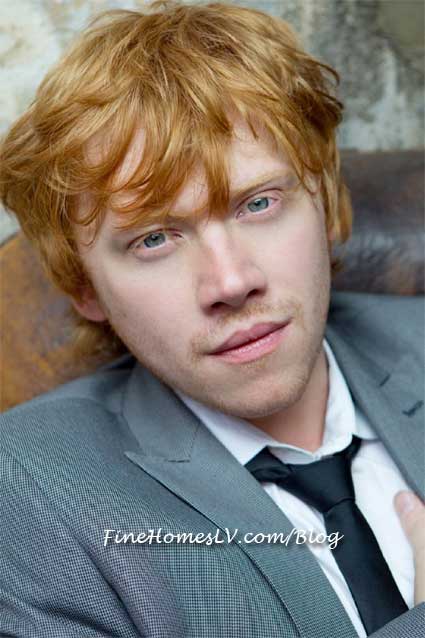
Rupert Grint ... Ron Weasley
Ron is same Ron :)
Ron aynı Ron :)




Daniel Radcliffe ... Harry Potter
Harry'deki büyük değişiklik:
Big changement in Harry:


Evanna Lynch ... Luna Lovegood
İşte zamanın iyi gelmediği biri. Birden + 20 yıl geçirmiş gibi.
Here is someone whose time doesn't working for good Like she had extra 20 years...


Tom Felton ... Draco Malfoy
Draco ile Heröione çıkıyormuş:)
Draco & Hermione is dating :)


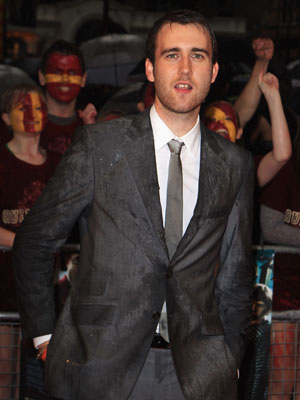
Matthew Lewis ... Neville Longbottom
Asla aklınıza gelmezdi. İşte çocukluğuna bakıp reddetmeyeceksin adamı. İlerde neye dönüşeceğini bilemezsin:)
You would never think. You shouldn't reject a child because of his appearance. You can never know what he will turn up to:)




Bonnie Wright ... Ginny Weasley
Bir Vaaaov da küçük Ginny için...
A Waaaow for little Ginny too...


Harry Melling ... Dudley Dursley
He is the one who I most curious about his changement but ehhh...
O değişimini en çok merak ettiklerimden ama ehhh...


James Phelps ... Fred Weasley
Oliver Phelps ... George Weasley
İkizler aslında kızıl değilmiş. En çok ona şaşırdım.
Twins weren't ginger that makes me surprised.


At last but not least:
Ve son olarak:

Her zaman "Bak X filmindeki kimler kime dönüşmüş" konuşmalarını sevmişimdir. Şimdi bakın Harry Potter'daki kimler kime dönüşmüş:


Emma Watson ... Hermione Granger
As all we know our little Hermione has turned out to beautifull swan.
Hepimizin bildiği gibi küçük Hermione'ımız güzel kuğuya dönüştü.


Rupert Grint ... Ron Weasley
Ron is same Ron :)
Ron aynı Ron :)


Daniel Radcliffe ... Harry Potter
Harry'deki büyük değişiklik:
Big changement in Harry:


Evanna Lynch ... Luna Lovegood
İşte zamanın iyi gelmediği biri. Birden + 20 yıl geçirmiş gibi.
Here is someone whose time doesn't working for good Like she had extra 20 years...


Tom Felton ... Draco Malfoy
Draco ile Heröione çıkıyormuş:)
Draco & Hermione is dating :)


Matthew Lewis ... Neville Longbottom
Asla aklınıza gelmezdi. İşte çocukluğuna bakıp reddetmeyeceksin adamı. İlerde neye dönüşeceğini bilemezsin:)
You would never think. You shouldn't reject a child because of his appearance. You can never know what he will turn up to:)


Bonnie Wright ... Ginny Weasley
Bir Vaaaov da küçük Ginny için...
A Waaaow for little Ginny too...


Harry Melling ... Dudley Dursley
He is the one who I most curious about his changement but ehhh...
O değişimini en çok merak ettiklerimden ama ehhh...


James Phelps ... Fred Weasley
Oliver Phelps ... George Weasley
İkizler aslında kızıl değilmiş. En çok ona şaşırdım.
Twins weren't ginger that makes me surprised.


At last but not least:
Ve son olarak:

Kaydol:
Kayıtlar (Atom)
